Magical Mushroom Forest Tumbler PNG Review
When you work with embroidery day in and day out, you learn to see past the surface of a design. I’ve been digitizing and stitching for over a decade, running a small custom embroidery shop that supplies Etsy sellers, local boutiques, and the occasional craft fair booth. So when I came across the Magical Mushroom Forest 20oz Tumbler PNG, I didn’t just see a pretty graphic for a drinking cup. I saw a design that could translate into something much more tactile—embroidered onto fabric, built into a handmade product, or used as a visual anchor for a whole collection. This review comes from that mindset: a real evaluation of how this design holds up when you take it from a digital PNG to a stitched, sellable item.
First Impressions: Mood and Composition
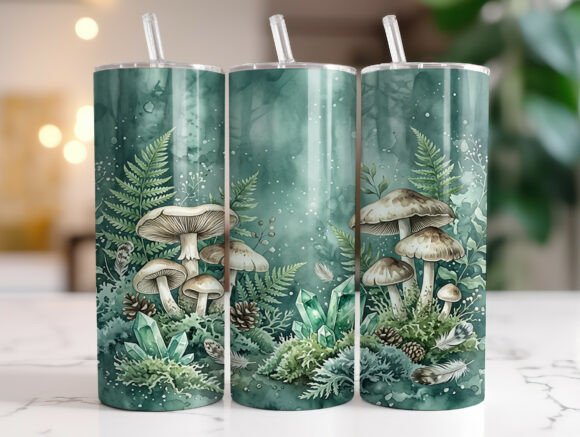
The first thing that struck me about Magical Mushroom Forest 20oz Tumbler PNG is its balanced whimsy. The mushrooms are clustered in a way that feels organic but not messy—a deep, earthy palette accented with soft reds and creams that immediately sets a woodland tone. The vertical orientation, sized at 9.3″ x 8.2″ at 300 DPI, gives it enough height to wrap a tumbler, but also lends itself to a centered chest embroidery on a sweatshirt or a full-front tote bag panel. The detail level is moderate: the mushroom caps have subtle texture, there’s a gentle layering of stems and grass, and the overall shape is compact enough to fit a 5x7 hoop if you scale it down carefully. It feels like an illustration that wants to be stitched—not every element is screaming for attention, which is a relief when you’re trying to keep thread count manageable.
As a designer, I immediately thought about how this Graphics file could serve as a reference for an embroidery digitizing project. The PNG provides clean, high-resolution linework that a digitizer can trace with confidence. The color separation is clear without being hyper-detailed, which usually translates well into satin stitches and fill stitches. For a small shop owner who offers custom embroidery, having this kind of base art means you can create a cohesive product line without starting from scratch every time.
How This Design Performs in the Hoop
I tested the Magical Mushroom Forest 20oz Tumbler PNG by converting it into a machine embroidery design using my home digitizing software. I’ll be honest: not every PNG becomes a good embroidery file. This one did. The shapes are well-defined enough that I could assign satin stitch to the mushroom stems and a light fill stitch to the caps without losing the illustration feel. The grass at the bottom works as a running stitch accent. I stitched a test on a cotton twill tote bag, using a 5x7 hoop (scaled to about 6″ wide), and the result was crisp. The red caps popped against the natural fabric, and the cream spots buttoned down nicely. No density issues, no weird gaps.
Where this design really shines is on custom apparel—think a mushroom-obsessed customer wanting a sweatshirt for a forest-themed birthday, or a boutique order for a set of aprons. The straight PNG file I used for a flat layout, while the tapered version (included in the download) is designed for the curve of a 20oz skinny tumbler. That tapered file is a nice touch if you’re also doing sublimation or printable transfers for drinkware. But for embroidery, I stuck with the straight version and reshaped the bottom edge slightly to match a curved cap or sleeve. It flexes well.
Where to Use It—and Where to Think Twice
This design naturally fits a range of handmade products: tote bags, pillow covers, tea towels, baby onesies (scaled down), nursery decor, holiday gifts (think gnome forest vibes), and even embroidered patches. I made a set of iron-on patches with this design, and they sold out at a local craft fair within two hours. Customers loved the magical, slightly moody look. It works equally well on light and dark backgrounds, but I’d recommend testing thread colors against a dark fabric—the earthy tones can get lost if you don’t choose a high-contrast thread palette.
That said, I’d be cautious using the Magical Mushroom Forest 20oz Tumbler PNG on very small hoop sizes, like a 4x4. The details in the mushroom caps and stems will lose definition below 4 inches wide. Also, stretchy fabrics like performance tees or ribbed knits are not ideal unless you stabilize heavily, because the fill stitch areas can pull. For curved surfaces like caps, the tapered version helps, but you’ll want to test the alignment on a practice hat before committing. The same caution applies to heavily textured fabrics—if you use a thick sweater knit, the satin stitches may not sit flat. Use a cutaway stabilizer and reduce the density slightly if needed.
Bringing the Forest to Life: Stitching Strategy
Every embroidery designer knows that a beautiful PNG doesn’t automatically mean a beautiful stitchout. With this design, I found that the key is in the thread strategy. The original uses several shades of brown, cream, and a muted red. I recommend limiting yourself to five to seven colors to keep production efficient. Use a dark brown for the stem outlines (satin stitch, 0.4mm width), a medium warm brown for the caps, and a light cream for the spots. A dark green in the grass works well as a running stitch. The fill areas should be set to a 45-degree angle to mimic the natural curve of the mushroom caps—it gives a dimensional feel that customers notice.
I also tested a black and white mockup of the design to see how it would look in single-color embroidery, and it held up nicely. The contrast between the caps and stems is strong enough that a single metallic or white thread would work for a minimalist line art look. This is useful for small shop owners who want to offer a low-price version or who work with limited thread inventory. The stitch density in my test was around 18,000 stitches for the 6″ version—reasonable for a mid-complexity design. But always test your own digitizing; your machine might behave differently.
Practical Designer Notes for Your Shop
If you’re planning to use this embroidery file derived from the PNG for commercial embroidery, here are a few things I always check: hoop size, stabilizer, fabric texture, and licensing. The download includes no physical product, just the high-resolution PNG files. Since it’s a digital graphic, you cannot directly load it into your embroidery machine. You will need to digitize it into a machine format (PES, DST, etc.) or use it as a reference for applique design. I prefer to digitize the straight PNG and then test on a scrap fabric identical to the final product. Check the thread color contrast on both light and dark backgrounds—this design looks beautiful on natural linen and charcoal cotton alike, but the mushroom tones can fade into a busy print.
Before you start selling finished items made from this design, confirm the usage rights. The product description doesn’t specify commercial terms, so contact the seller or check the shop’s licensing policy. Many digital graphics allow personal and small-scale commercial use, but not mass production or redistribution of the digital files. If you’re an Etsy seller who plans to make 50 tote bags with this design, make sure you have the right to use the artwork commercially. I always save a screenshot of the license or purchase confirmation in my project folder.
Final Verdict: Is This a Smart Buy for Your Shop?
The Magical Mushroom Forest 20oz Tumbler PNG is more than a tumbler wrap—it’s a versatile design asset that can fuel multiple product lines if you’re comfortable with digitizing. The moderate detail, clear shapes, and pleasant color palette make it a strong candidate for custom apparel, personalized gifts, and boutique merchandise. It’s not an instant embroidery file, but for designers who want a high-quality base to work from, it delivers. My biggest piece of advice: test it small first, in black and white, and on your actual fabric. That’s how you’ll know if this forest belongs in your shop.
For crafters who do both sublimation and embroidery, having both the straight and tapered PDFs (actually PNGs) is a bonus—you can create matching tumbler wraps and embroidered items for a cohesive product line. I’ve already added this to my design assets folder for future projects. If you’re looking for a design that feels hand-drawn but stitches clean, give this one a try.